Showing posts with label indonesia. Show all posts

Sunday, October 10, 2010

Best’s and Worst’s of Indonesia, arguably the world’s most spectacular country


Admittedly, calling Indonesia the most spectacular country is quite bold. We visited four islands (not counting the ones in Komodo National Park) out of 17,000+ islands in this remarkable archipelago, and are awestruck by its diversity. Java, Flores, Bali, and Gili Trawangan are all so different that they might as well constitute four countries in and of themselves. Between these islands differences in culture, way and pace of life, religion, food, landscape, and natural beauty are striking and easily noticeable. We have constantly found ourselves thinking about the other 16,996+ islands we didn’t have a chance to visit. One could easily spend years exploring Indonesia and barely scratch the surface. It is hard to imagine another country with such splendid diversity.

That said, travel in Indonesia is not without its frustrations. The constant touting, bargaining, hard-selling, and the feeling of being ripped off made us want to pull our hair out from time to time. At various instances, each of us became so frustrated that we felt like we didn’t have the will to continue traveling. At other times we were so overwhelmed by the generosity of the Indonesian people and intensity of the natural beauty that we wanted to move there. Perhaps, it is this bittersweet element that makes Indonesia such an enchanting travel destination. We know that we will soon forget the challenges and we will be left with only shining memories of this nation of islands.

Leaving Indonesia marks a real transition in our journey. We have now been on the road for a little over three months (seven more to go), and, following a brief stop in Singapore, we will leave Southeast Asia. Over the next few months we will explore India and Nepal. First on the agenda is a month-long trek in the Everest Region. I have been fantasizing about hiking in the Himalayas for more than 10 years now. In a way, visiting the Nepal Himalaya as part of this trip is like fulfilling a dream within a dream.

Saying goodbye to Indonesia, we hope you enjoy these stats and a few of our highlights and lowlights.


By the numbers

Days in Indonesia: 56

National Parks/Natural Areas Visited: 5

World Heritage Sites Visited: 4

Stomach Illnesses: 1 (a bug caught Rachel on OUR LAST DAY)

Flights: 2

Train Rides: 0

Boat Trips: 4

Bus/Shared Taxi Rides: 18

Average $ Spent per Day (excluding flights): $82

Cheapest Hotel Room: $15 a night (at 4 places along the way)

Cheapest Dinner (for 2): $5.40 (at Hotel Silverin in Bajawa, Flores)

Photos Taken: 4,253 (an average of 76/day-yikes!)

Best’s

Best Day

Nick: Seeing our first Komodo dragons then snorkeling over the absolutely pristine coral at Pink Beach. All of this was topped off by watching a splendid sunset on top of our boat.

Rachel: The day we walked around the Sidemen Valley and came home just in time stay dry and enjoy a huge thunderstorm from our balcony

Best City/Town

Nick: Sidemen Valley, Bali (I want to live there someday)

Rachel: Sidemen Valley, Bali

Best National Park

Nick: Komodo National Park

Rachel: Komodo National Park (Bromo is a close 2nd)

Best Meal

Nick: Tomato, garlic, chili pasta we cooked for ourselves in Ubud (I just loved cooking for the 1st time in more than 2 months)

Rachel: The first time I had Gado-Gado in Java- boiled vegetables, tofu, tempeh, and a boiled egg all smothered with gingery peanut sauce, and of course rice crackers on the side!!!

Best Wildlife Experience

Nick: Stalking Komodo dragons and then being pursued by said dragons while taking photos (Snorkeling in Komodo National Park is a close second)

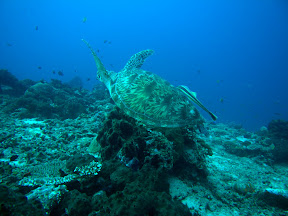
Rachel: Watching a large turtle sleep on a dive in Gili T

Best View

Nick: Bromo National Park from Gunung Penanjakan (the best view of my life, so far)

Rachel: Sunrise over Bromo National Park from Gunung Penanjakan (tied for best view with the Fitz Roy Range in El Chalten, Argentina)

Best Surprise

Nick: Trekking to Belaragi Village, Flores (runner-up: Sidemen Valley, Bali)

Rachel: How good the food is in Indonesia

Best Hotel/Hostel

Nick: Sawah Indah, Sidemen Valley, Bali

Rachel: tied between Sawah Indah in Sidemen Valley and our villa on Gili T

Place to which we’d most like to return

Nick: Bromo National Park in Java

Rachel: Sidemen Valley, Bali

Most Fun

Nick: Partying on Gili T with Kyle

Rachel: Ditto, Kyle put the fun in Indonesia!!

Worst’s

Worst City/Town

Nick: Labuan Bajo, Flores (oppressively hot and humid with prolific trash everywhere and the stench of rotting fish mixed with the smell of garbage)

Rachel: Labuan Bajo, Flores; rotting fish and trash leave a lasting impression

Worst Meal

Nick: Fruit Salad in Maumere, Flores (you’re probably thinking, how bad fruit salad can be? The answer is, pretty bad when it is heavily salted and seasoned with white pepper.)

Rachel: Dinner at Arabika at the Ijen Plateau. Just exactly how does it take one and a half hours to make noodle soup from a package (think Ramen)?

Biggest Waste of Money

Nick: The trek to Belaragi was a pretty poor value for the S

Rachel: $5 I paid for an offering basket that should have been $0.50, my bargaining sense was absent at that moment.

Most Disappointing Moment

Nick: Our boat for the Komodo National Park trip

Rachel: Three minutes into a shower and the water turned black with mud. Hidayah Homestay, Moni, Flores

Worst Hotel/Hostel:

Nick: Hotel Bintang Wisata, Bajawa, Flores

Rachel: Hotel Bintang Wisata, Bajawa, Flores (I think there was a mouse living in the mattress)


Saturday, October 9, 2010

“Welcome to Paradise” --Kyle


1-8 October 2010
Close your eyes. No, open them. No, close them again. Imagine you are on a small tropical island. Imagine turquoise waves breaking on white sand beaches. Imagine your drink of choice in hand. Imagine your favorite Bob Marley song playing somewhere in the distance. If you don’t have a favorite Bob Marley song, now may be the time to adopt one. “…Don’t worry, about a thing, cause every little thing is gonna be alright…”


We spent a week on Gili Trawangan (aka “Gili T”), one of the three “Gili Islands,” sandwiched between Lombok and Bali. In addition to spending a week in paradise, we were able to entice our good friend Kyle to visit for this hedonistic misadventure. The island exceeded all our expectations. We stayed in a three- bedroom villa with marble floors, a private pool, and “house boys” that would come at the ring of a bell. The house was gorgeous and probably the nicest place we will stay in during our ten month journey. Thank you Kyle!

Gili T has successfully melded its inherent beauty with a fun, party-ready atmosphere. It is a tiny island and takes less than three hours to circumnavigate on foot. This makes island exploration easy; until you try to find your way home late at night on the twisting trails that cover the island's interior. We found it best to stick to the coast where the ever present ocean keeps you on track and dreamy eyed with its blue, clear water and neighboring island vistas.

The more tropical islands I visit the more I love them. They offer a slowness and solitude that is sublime. This slow pace is especially evident on places like Gili T where motorized vehicles outlawed, and traffic jams consist of horse carriages and bicycles. There is no need to dodge speeding motor bikes and bemos belching diesel fumes in this small piece of paradise.


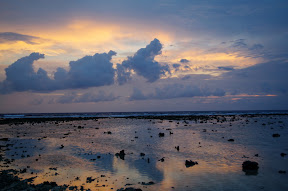
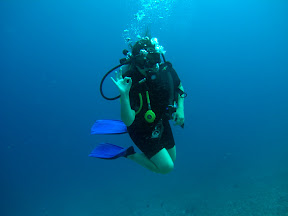
Our days were divided between long swims in our villas pool, lounging with cocktails or fresh juice, snorkeling alongside large schools of fish and graceful turtles off the beach, riding our bikes around the island, sitting in restaurants on the beach, dancing and drinking the night away, diving, listening to excellent live reggae, making great new friends, partying like we were 18 years old, and generally enjoying ourselves on a paradise island. We watched the sunset over Bali’s distant Mount Agung in beach bars specifically constructed for wasting away the last moments of daylight-bonfire and Bob Marley included. We ate lightly seared, freshly caught tuna steaks and giant prawns. And even I (the “vegetarian”) admit that these meals were delicious and irresistible.


Sounds exhausting, right?

Tuesday, September 28, 2010

“Thunder Struck” in the Sidemen Valley


20-28 September 2010

“It looks like its letting up” Nick repeats for the 3rd or maybe 10th time today. It has been raining for almost three days and Nick is pacing from balcony to balcony, across the beautiful hardwood floors of our glass enclosed room overlooking the Sidemen Valley. I am comfortably reading my 13th book of the trip under a batik quilt, reveling at the novelty of being chilly, and peeking out from time to time to enjoy the view through the open sliding glass doors that comprise two of the four walls of our room. Being marooned here in this villa, tucked serenely in the Sidemen Valley, couldn’t be more relaxing for me or more frustrating for Nick. While I contemplate taking yet another bath in our giant black stone bathtub, Nick exclaims that he must go on a walk before dinner. I accompany him and it actually does not rain for a full thirty minutes, allowing us to enjoy the indescribably green landscape of the now misty and soggy countryside.


After a night of lightning and thunder, we awoke to clearing skies and great expectations for a day outdoors. After breakfast, we put on our running shoes and hit the road for a long run across the rolling green valley. On this and other runs during our stay, we ran up and down hills, through small villages, encountered many friendly children, drying peanuts and cloves, an impromptu roadside cock fight, eight year olds riding motorbikes, disinterested dogs, and a rain swollen river. In the afternoons it usually rained and as such we read, ate lunch, napped, did yoga, waited for the clouds to clear for a good view of Gunung Agung, took additional walks, and used the internet while drinking banana lassi’s. We originally planned to stay here three days, three turned to six, six turned into nine. We love this valley.


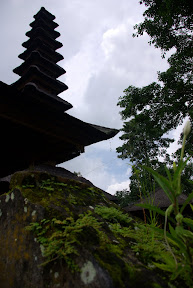
The next few days were spent doing much of the same. We soaked up the bright green calm of the terraced rice fields. I repeatedly tried and failed to count the number of terraces visible from our balcony-there are just too many. The intermittent bursts of thunder became almost comical as they repeatedly caused me to scream or for Nick to literally restrain me from jumping out of bed in the middle of the night (some of you may be familiar with my easy to scare nature). One day, in between rain storms, we climbed innumerable slick-as-ice stairs up a nearby ridge to visit a beautiful spire-like temple visible from the valley floor below. After our exhausting hike, we made it back to Sawah Indah (our hotel) just as the rain started to fall, fat raindrops threatened to soak us in the seconds it took to climb the stairs to our patio entrance.


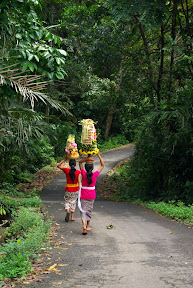
On September 23rd, we walked the perimeter of the valley (the first of many such walks) and in the process were able to enjoy the preparations and processions of the bi-annual full moon festival to honor temple guards. We saw young girls and women dressed in lace and batik sarongs, balancing tall pyramids of fruit, beautiful flower arrangements, mirrors, and rattan-woven baskets on their heads while they headed in and out of temples. Later that day, one of the biggest rains in our 28 year old hotel managers memory bulleted through the valley, resulting in landslides and roads sloughing off the hillsides. We watched from our terrace as the neighboring farmers braved the rain and cleared out the drainage systems that keep their terraces from flooding over and sliding down the steep incline. It was likely the hardest sustained (three hours or more) rain Nick and I had ever witnessed. Ah, the tropics!


On another day, we purchased beautiful handmade tiles (about $0.80 apiece) from the same tile maker who makes the beautiful tiles that cover the floors and bathrooms at Sawah Indah. Nick kept me about my senses as I considered buying enough tiles to fill an imaginary kitchen floor in a home we do not own. Talk about the potential for buyer’s remorse.


In the evenings, we drank beer, and arak cocktails, watched the sunset, and anticipated the rain as it moved across the valley. We learned the joys of watching it head straight for us, a million pin pricks in each of the hundreds of terraced rice fields. Watching weather arrive is a strangely fulfilling experience when you have nowhere to go and nothing to do.


Friday, September 17, 2010

Uber-relaxed in Ubud


12-17 September
We arrived back in Bali from Flores and almost immediately got into an argument with some taxi drivers. To be honest, we were not excited to be back in Bali. Our four days in beautiful Sanur a few weeks ago made us weary of touts and budget busting prices. Weary is actually a word we have started to use more often than we should.

We made our way to Ubud from the airport (about a 1.5 hour drive) and lucked out at Shanti Homestay with a beautiful bungalow with attached kitchen for about $25 a night! Attached kitchen!! I write this post from our back garden patio where we just enjoyed lunch and a coffee. After two and a half months of eating out, we were thrilled to have the opportunity to self-cater and cook some meals of our own. In addition, our hosts cook us the best breakfasts, usually a scramble or pineapple pancake with a large plate of fruit, we have had on the entire trip. After one night we decided to stay a week.


Ubud is a pleasant town and has more shops than even the most dedicated shopper could handle. There are also some beautiful countryside walks to enjoy, a forest full of monkeys, and plenty of transit touts to avoid on the streets. We spent the first few days literally wondering through the hillside enjoying the never-ending rice fields and river canyon views. We've exchanged books in used bookstores, Nick cooked us some delicious pasta, I've bought more jewelry than I should, and I enjoyed a great yoga class.

The highlight for both of us was a Kecak performance -monkey chant dance - we attended in one of the local temples. Kecak is hard to explain, but it sounds to us like the word "kecak" (pronounced "kechack") repeated over and over by sections of performers at different tones, at different speeds, in whispers, and in screams. The leaders of the group yell loudly to change the speed or intonation of the sound. All the while the performers are sitting cross-legged in a circle and swaying side to side, back and forth, hands up, hands down, laying down, etc. etc. etc. This seems like chaos, but it is expertly performed and is something that we will never forget. This particular performance molded kecak and the ramayana story together. At the end of the performance a man came out and danced wildly through a pile of burning coconuts, kicking husks this way and that, some practically landing on tourists laps. This was quite amusing.

We will spend a few more relaxing days in Ubud - more hiking and yoga - before heading northsouth to the Sideman Valley and then north to Lovina. We have lost our weariness and have fallen in love with Bali after all.

Monday, September 13, 2010

Crossing Flores Island, Part II: Bajawa to Maumere


Other Titles: The pleasures of being patient.

9-12 September

After returning from our trek and staying at the more comfortable and hospitable Silverin Hotel just outside of Bajawa, the staff helped us to flag down a shared taxi for transport to the town of Moni. This method of travel is very efficient but initially appears dubious at best. After strapping our bags to the roof, we were loaded into the “way back” of a 6-8 passenger car (the size of a hatchback). We headed off and my eyes widened as I counted how many people were in the car – 1 adult and 2 children in the front passenger seat, 2 adults and 3 children in the middle seat, and 3 adults (ourselves included) in the back seat. A total of 12 people including the driver! We were in for a cramped, kid puking, 3+ hour ride to Ende, where we would pick up another shared taxi on to Moni. Luckily, we were sitting next to a very nice man who was a tour guide and spoke great English. The car we found in Ende was itself one of the highlights of my day. This was a large SUV, pimped out (as so many of the cars and bemos are on Flores) with stickers emulating broken windows and giant slogans like “Casanova” or “Don’t Touch” printed on the front window, a booming sub-woofer in the back, and a driver that could not have been more than 17 dressed like a total gangster. I felt very bad for the 90 year old man sitting next to Nick. We drove through the pouring tropical rain, passing actively eroding hillsides and dodging large boulders – sometimes as they fell from the roadside. All this while rocking out (I had my ear plugs in for awhile as I was sitting on the sub-woofer) to a mix of classic rock, rap music, and sappy Indonesian ballads.

Arriving in Moni in the early evening we were very road weary and starving (we skipped lunch)!! We ate dinner, arranged for a 4:30am motorbike transport to the Kelimutu Lakes, were invited to a Idul Fitri (end of Ramadan) party the next day that everyone was very excited about because they “had not drunk any alcohol for one month” (but we thought most Muslims did not drink alcohol?), and went straight to bed.


Early morning and our first motorbike ride of the trip (first ever for Nick). It had been raining nonstop for a few days, so we were worried about the dark 13km ride to the trailhead and whether the lakes would even be visible at sunrise. Miraculously, the rain stopped long enough for us to arrive at the lakes and enjoy them before starting up again on our way down the hill. The lakes are stunningly gorgeous. The Kelimutu Lakes are three crater lakes of three different colors, literally right next to one another. Opaque turquoise, chocolate brown, and dark blue/black. The local people believe that these lakes are the final resting place for the souls of the dead – the young go to the turquoise, the old to the brown, and the wicked to the black. I will say it again – they are stunning. I think you can see them in the aerials on Google Earth or Google Maps – find the town of Moni, Flores, Indonesia and they should be nearby.


After breakfast, and in a break from the rain, we walked to a nearby waterfall and then the whole length of the small town. On the way back to our hotel we started to talk about how we wished that there was a store in town or a market because we hoped to by some Ikat weavings before we left Flores. Before reaching our hotel we decided to stop at a restaurant for a cup of kopi susu (coffee with milk), it was closed because of Ramadan but the woman across the street offered to make us coffee and then asked “You like Ikat weaving? Jenny have Ikat to sell from my village. Come to Jenny house”. As everyone in the town had been overwhelmingly friendly, we did not hesitate to go to Jenny’s house, have some coffee, and do a little shopping. Jenny turned out to be the woman we met on the street, who, to our amusement, continued to refer to herself in the third person throughout our conversation. Jenny’s family was from Nggela Village and she had many weavings made by herself (“this made by Jenny”) and other members of her family. The weavings were beautiful and very good quality, we bargained for awhile and enjoyed talking to Jenny over a delicious cup of kopi susu (coffee with milk). After about twenty minutes we finally got her to agree to our low offer. I usually do the bargaining, but Nick’s foray as the “bad cop” or strict husband today really helped us make a great deal on these weavings. Buying things in this manner is a true pleasure.

The rest of the day we spent with our newfound Indo friends, celebrating the end of Ramadan and watching a bunch of young Indonesian men sing karaoke and get fall on the floor drunk on arak (homebrew palm liquor) and beer. Meanwhile, their wives, mothers, and sisters made them food and tried to ignore them – I was the only girl invited to the party. On that note, I was actually happy to be a girl in this culture today; it was much easier for me to refuse drinks while Nick was expected to partake in round after round of shots…He made it through very drunk but relatively unscathed.


The next day we headed down to Maumere on the coast – our final stop before flying back to Bali. We arrived at the Gading Resort outside of town and settled into our beachside bungalow. We spent the rest of the day staring at the beautiful blue water and distant islands, snorkeling, and relaxing. In the morning, we ran on the beach (we are now officially in training for our Nepal trek) and stared at the water some more before heading to the airport. Bali, here we come!

Great moments that I missed:

Watching music videos while riding in the back of a pimped out bemo. Everybody loves Shakira.

Watching a group of young boys vigorously shake a bemo as they fueled it, because they think that shaking it will allow more gas to get into the tank

Seeing a teenager dressed like a perfect drug dealing gangster in a village that barely has electricity let alone a serious gang problem (is this Compton?)

Car surfing – 10+ people riding on the roofs of cars on steep, windy roads, in the rain

Road Work – Waiting for 20 minutes while men perched precariously 50 feet up on a vertical slope (no ropes) pushed large boulders off onto the road to prevent future landslides and rockfalls

The incredible, impossible to describe, scenic nature of Flores Island

The smell of roasting coffee wafting through the car or bus/window over and over again as we cruised along the highway

The woman we rode with from Moni to Maumere who had a full set of diamond “grills” on each of her upper teeth.

Many of the men you meet on the street (and on buses) are carrying an unsheathed parang (machete) at least 2 feet long. Somehow, this does not alarm us at all.

Seeing an entire driveway, sidewalk, or lane of the road filled with cloves or coffee left to dry in the sun.


Trekking Back in Time to Belaragi


8-9 September 2010

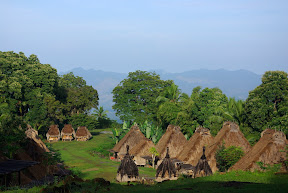
Life in Belaragi, Flores continues pretty much the way it did centuries ago. Houses are made completely of wood, bamboo, and palm. No metal screws or nails are used in construction. Absent also are electricity, telephone lines, television, and many other modern conveniences (and hindrances). If you squint slightly, you are transported back hundreds of years in time. The air is clean, water is clear and abundant, and the pure black night sky escapes light pollution. Belaragi is surrounded by dense rainforest, high forested peaks, distant volcanoes, and from the edge of town you can see the azure Sawu Sea.

We met our guide, William, outside our hotel in Bajawa. After talking to him about hiring a bemo to take us to some of the traditional villages outside of town he mentioned that he was guiding a hike to a remote village near Aimere on the coast the following day. Our interest piqued, he showed us a picture of Belaragi on his cell phone. Immediately, we knew that Belaragi had to be the next destination on our trip across Flores.

Belaragi receives few tourists. It is only reachable by a long, steep hike, and this makes it inaccessible to all but a few intrepid tourists. It is not featured in any guide books, and as far as we know it might not even appear on any maps. William is the only guide who leads trips to Belaragi. He began leading trips to village four years ago, and Rachel and I constituted the eleventh group of tourists (fewer than 30 people total) to visit Belaragi.


The trail to Belaragi starts from William’s house a village on the outskirts of Bajawa. William informed us that the hike is approximately 8 miles and usually takes anywhere from 6 to 12 hours, depending on fitness level, weather, and the trail’s (or lack thereof) condition. As we walked up a moderate incline past tiny old women carrying massive canes of bamboo on their heads or shoulders we hoped that we would not repeat the fate of the only other group of tourists this year and arrive at Belaragi at 9 pm. After an initial incline the trail turns steeply downward. The path is narrow, steep, slick, rocky, and bordered by dense, mostly-untouched rainforest. As a result of the heavy rain the day before, the trail was muddy and slippery in sections. Picking off leeches, at times we felt like we were walking on ice covered with motor oil, and both of us slipped and fell straight on our butts several times-thankfully avoiding injury.


After stopping for lunch at the home of a farmer who lives three hours down the trail, we began to take notice of the dark, thickening clouds that were quickly approaching us and hastily made our way on the progressively overgrown trail. It soon became quite clear that, barring a miracle, the fair weather that had graced the first part of our walk was soon to vanish. With our porter hacking away at the thick grass and fallen tree branches with his parang (machete) the tropical downpour descended upon us. Covering up with rain jackets and stowing everything in plastic bags we were soaked in seconds. Water dripped down our legs and puddled in our shoes. For the next two hours we bushwhacked in the heavy downpour as thunder erupted right above our heads. We crossed flood swollen streams, shin deep, and trudged along the muddy trail, which itself filled with water and flowed with ferocity in sections. Looking like drenched rats, the rain finally abating, we emerged from the rainforest awestruck by Belaragi.

Shedding our packs and wet clothes we became mesmerized by the most beautiful of Ngada traditional villages. Two parallel rows of attractive wooden huts flank the village’s central area, a wide swath of bright green grass between. Words cannot adequately describe Belaragi’s spectacular natural setting, and rarely does one see a man-made settlement that complements its surroundings so gracefully.


Nobody in Belaragi knew we were coming (there are no phones), and, quite frankly, nobody seemed to be moved or impressed by our arrival. There was no fanfare, no weavings shoved in our faces from expectant sellers, no offers of cold Coca Cola’s or snacks. How refreshing! Gradually, word circulated that there were a couple of tourists in town and a few of the villagers came to greet us, and brought us glasses of sweetened, local coffee. The hut where we would spend most of our time was built “several hundred years ago” and consists of a large front porch, a living/sleeping area, and a kitchen. The entry way to the kitchen is surrounded by ornate, symbolic carvings and is deliberately constructed so that you must bow upon entering, in order to show respect to the family’s ancestors. Although Belaragi is officially Catholic we witnessed very few signs of Christianity during our visit. Villagers still ascribe to many traditional, animist beliefs and rituals. Carved, wooden totem-like poles are constructed to honor male ancestors, and small thatched huts pay homage to female ancestors. Figurines and/or small wood houses placed on top of each house symbolize social standing and pay respect to ancestors. Respect for past generations plays prominently in everyday life.


During most of our time in Belaragi we did very little except relax and make small talk (through William and our rudimentary Indonesian) with the villagers. For the first time on this trip we honestly did not feel like tourists. The whole time in Belaragi we felt like welcomed guests-sort of like when visiting the home of a distant relative. The hospitality of the villagers was most apparent at dinner. We sat and watched as dinner was prepared over an open fire inside our hut (no gas or electric stoves here). Preparation commenced with the ritualistic, somewhat gory, sacrifice of a chicken, followed by the burning off of its feathers over the cooking fire. The chicken was then gutted and the entrails were presented to a village elder, her teeth pitted and her mouth stained red from chewing betel nut, for inspection. Over the course of several minutes she examined the chicken’s heart, intestines, and other parts to make sure the sacrifice was successful and that the chicken did not contain any bad omens (like fortune telling via dead chicken). Our chicken having passed the test, dinner was prepared. During the preparations for dinner, a commotion outside the house alerted everyone to the fact that a 1-meter long python had found its way into the covered storage and hen house just outside the back door of the house. The snake was killed and everyone went back inside as dinner was almost ready.


Our meal began with the flinging of rice in the air, and prayers and offerings presented to the ancestors. Rituals completed, we feasted on an ungodly amount of tasty purple colored rice, cassava leaves flavored with papaya flowers and coconut, tasty chicken, chicken juice (a thin, tasteless soup), and a boiled egg for Rachel. Mental note, never finish your glass of chicken juice or it will be refilled. All of this was washed down with copious amounts of arak, a strong, local palm liquor, which superficially resembles weak tequila and makes you grimace and convulse after taking a shot. We talked with the people of the village for a few hours, translating through our guide, and eventually our sleepiness was noticed by the group, who sent us directly to bed. Pumped full of rice and shaken by arak we retired to the sleeping/living room, in the company of several villagers too drunk or stuffed to make it back to their own houses. The combination of the candlelight and quiet chatter and laughter lulled us to sleep after our long day.

The next morning started at dawn with cups of coffee. Sitting outside with several of the villagers, bathed by their constant cigarette smoke, we gazed as the first morning sun hit Belaragi. Breakfast was served several hours later (we are learning true patience here in Indonesia) and consisted of tasty purple rice, boiled cassava, and eggs. We sat on the ground in a circle, as we had at dinner the night before and gave our thanks, through William, to one of the village elders. He wished us happy and safe travels and asked us to come back soon and bring a large group of our friends and family. Any takers back home?

As we said our goodbyes and started our two-hour downhill walk to the bemo awaiting us at the first patch of good road, life continued in Belaragi as it has for centuries. We learned that the money contributed by our visit will help to make improvements to the standard of living in Belaragi. As is the case in many traditional villages across the world, much of the younger generation chooses to live closer to a town where modern amenities, education, and health care are more available. We realize that this beautiful, traditional way of life will disappear if the younger generation chooses to abandon Belaragi. While this is sad, all people deserve access to education and health care. Our great hope is that, someday soon, a school, health clinic, and better road will be built so that future generations will continue to inhabit the homes of their ancestors and call Belaragi home.


Our visit to Belaragi refreshed us and enriched our understanding of Ngada culture. In this world of ever-expanding tourism it is difficult to stray from the beaten path. Down a slippery, muddy trail and through the pouring rain we found a small patch of peace, solitude and authenticity in Belaragi.

Sunday, September 12, 2010

Crossing Flores Island, Part I: Labuan Bajo to Bajawa


Alternate Titles: “Have Crackers, Will Travel” or “The Trans-Flores Shakedown”

4-7 September

We spent nine days traveling between Labuan Bajo and Maumere on Flores Island. While we had originally planned to do this via an expensive private car (about $100 a day), we learned shortly after arriving on Flores that there are shuttle buses and shared taxis along each leg of the journey. These mini-buses or cars have a lower probability of having chickens or pigs as passengers and extra people sitting on their roofs, and cost little more than the public bus (about $12-$15 for a 3-4 hour ride for both of us). The roads on Flores are rumored to be horrible. Having now completed the journey we are pleased with how smooth the roads are , and still horrified with queasiness at the omnipresent eye popping thousand-foot drop offs and never-ending hairpin turns. For these rides we obsessively carried crackers to settle our stomachs and took motion sickness pills to ward off any possibility of illness. Despite the many twists and turns, we are so glad that we traveled through Flores independently. Along the way, we were able to meet and befriend so many nice people, soak up both modern and traditional cultures, and sample the beautiful vistas that make Flores such a great place to visit.

Our first stop was in Ruteng, a stopover to save us from a 9+ hour ride to Bajawa. After an impossibly windy 4-hour bus ride, we arrived on a rainy afternoon at the Catholic monastery that would serve as our guesthouse for the night. After settling in, we wandered through the market a few times, gawking at the pig’s heads on the tables and marveling at the diversity of bananas for sale. Eventually we bought some bananas and then actually had to supply them to a restaurant later when I ordered a banana pancake and they were, miraculously, out of bananas. This is a common theme in Indonesia; the restaurant that is out of bananas when just a block away is an entire block so full of bananas that you cannot walk on the sidewalk. It is like the coffee plantation that runs out of coffee (Damn you, Arabika!) or the seaside restaurant that is out of fish. Alanis Morisette could write a song about these conundrums! But I digress… While in town we had to work hard to avoid picking up a guide, as almost everyone on the street wants to be your guide or help you find transport. Most of the people we meet are overjoyed to meet us and want us to write letters to them from home, while, in stark contrast, others literally stare us down. What we hope to be “looks of curiosity” appear to be an “I hate your guts” glares (we still do not understand what is going on here). After exploring the town, we walked up a small hill called Golo Curu that has sweeping views of bright green terraced rice fields and is accessible by foot from town. Along the way we enjoyed the company of a gang of between 3-20 children at a time –most too young to be considered guides- shouting “Hello Mister” at us and giggling. We referred to them affectionately as the “Ruteng Clan”.

The road to from Ruteng to Bajawa was equally as chaotic, but even more so because our driver was about 10 times more reckless. Somehow we completed the quoted 6-hour bus ride in just 3 hours. Happy to be off the road and arriving before dark, we ate guacamole (Yes!), drank beer, and enjoyed the cool climate and laid back atmosphere of Bajawa. The next day we struggled to find a guide, which was actually shocking to us after the pestering atmosphere in Ruteng! We met a guide named William who arranged transport for us to travel to a few of the traditional villages near town and to a hot spring near the town of Soa. William would later be our guide to the remote village of Belaragi and the coast beyond.


That day (September 6th) we went to two traditional villages - Luba and Bena - which are known for their picturesque dwellings and Ikat weavings. Luba Village, accessible via a dirt footpath about five minutes off the main road, was less touristy than Bena. When we arrived, a few children came out to play with us (we kicked a piece of fruit around for a few minutes) and the women in the village stopped what they were doing (weaving or cooking food) and hung up their Ikat weavings for us. The weavings are very bright and colorful and it was very interesting to be able to watch the women weaving. We purchased a colorful Ikat piece in Luba village, woven by a woman we met that day. Bena Village is just a few minutes down the road and is situated right below the magnificent Inerie volcano. As this village is just off the main road it receives many visitors and most of the traditional houses sell weavings, vanilla bean, or other trinkets. See more about the traditions of the Ngada people in the post titled “Trekking Back in Time to Belaragi”. After lunch (guacamole again!) we headed to a hot spring near the town of Soa. We relaxed in the interconnected pools and avoided the torrential afternoon rain as best as was possible.

The next day, we were abruptly woken up just before our alarm (at 6:30am) because the owner of the hotel we were staying at wanted a bucket that had ended up in our room the night before (we bought some hot water from them to take a shower) to wash his car –this is something that I imagine would never ever happen anywhere else. Indonesians are confusing to us at times. After this, we were more than ready to recharge our town-weary selves by trekking to a remote traditional village called Belaragi.

Friday, September 3, 2010

Hello, Mr. Dragon


1-3 September 2010
Because Indonesia consists of over 17,000 islands, it would be a shame if we didn't even attempt to explore a few of them by boat. So, after arriving on Flores Island and the shockingly trash-ridden beach town of Labuan Bajo we arranged to charter (ahem) a boat for three days to take us to Komodo Island, Rinca Island, and at least a handful of others. On this fancy, and frankly over budget, excursion we would see Komodo dragons in the wild, snorkel 2+ times a day, and enjoy some serious leisure time (just in case we weren't already relaxed enough).

Arriving at the dock off the main (and only) street in downtown Labuan Bajo, we were greeted with a sight that only Dr. Seuss or maybe a few other seasoned travelers that we know would not bat an eye at. The dock was missing boards (more than 10 in some spots), slopping to the left here, the right there, and generally a laughable sight. We were assured that it was perfectly safe and led (sometimes by hand) to our boat about 50 feet away. With a dock like this, what kind of boat would you expect that we had chartered? Once on the mid sized tug-like boat, we were lead to our tidy cabin (simple bunk beds), told that we would be leaving shortly and that we should take a seat on the park like benches that took up most of the space on the bow of the boat. There aren't many who can say that they have spent the majority of three days sitting on a park bench, but Nick and I can now join those proud few.

We soon arrived at our first of many snorkeling spots alongside one of the many tiny islands in between Flores and Komodo. This spot, like all of the snorkeling we did on this particular trip, was totally amazing. The reefs were amazingly intact and full of every color you could ever imagine. Seriously, pick a color any color - we dare you! Our favorite spot of the trip was definitely "Pink Beach", named thus because a red coral species washes ashore and mixes with the sand, turning it a dainty pink color. Pink sand beach!! I could hardly believe my eyes. These diverse coral rich sites are hard to explain. We took our Panasonic "underwater" camera with us on once and got some great photos - check out the Picasa album.


As an aside our "waterproof to 10 feet deep, shockproof" Panasonic Lumix did not survive it's second underwater foray and has yet to turn on (and it's not the battery). If you have a suggestion for a good point and shoot camera with video and maybe underwater possibilities let us know ASAP.

The other half of our trip was spent trekking on Komodo and Rinca Islands for a chance to see Komodo dragons!!! We were lucky to see them at both Komodo and Rinca-- and boy are they big! They can grow up to around 3m, live up to 70 years, and weigh about 100kg. Oh yeah, and they can run between 15 and 20 km per hour. If you are ever in a sticky situation with a Komodo, climb a tree and climb it fast! It's poison and bacteria ridden saliva won't kill you for about five days, so you will probably have time to get to a hospital. Probably.

On these palm studded islands we encountered probably around twenty dragons, all doing pretty much the same thing - resting (or pretending to rest as our guides warned). We were led by young rangers with long forked sticks to protect us from an approaching dragon. You wonder what kind of protection a long stick might have on a 100kg hungry dragon? Surprisingly, one touch from this stick and a dragon is completely demoralized - he looks away away, closes his eyes, and in some cases actually skulks away in shame (or the perception of shame). It comes to my mind that this tool could be useful to young women in bars.


Nicks love of photography certainly peaked the interest of a few of these dragons. While we maintained a safe distance, Nicks "get on the ground" approach for perspective purposes (I imagine) puts him into a size class that appealed to many of the dragons. They would start smelling the air with their forked tongues, get up off their bellies, and start moving towards us - I mean Nick- at a slow yet deliberate pace. Lucky for us, our rangers were well trained and expertly wielded their forked stick.

After three days of floating in the Flores Sea, snorkeling in pristine coral reefs, observing amazing and unique wildlife, and pretending not to notice the thousands of cockroaches on our boat, we were saltily ready for a shower and a more comfortable bed. While a little rough around the edges, we compare our experiences here in Komodo National Park to the Galapagos Islands. Some of you may know that Darwin's contemporary and co-discoverer of the the theory of evolution developed many of his ideas exploring the Indonesian Archipelago. Looking out at this beautiful bay studded with islands thinking about Darwin and Wallace, endemism and evolution, Komodo Dragons and marine iguanas comparing Komodo and the Galapagos seems appropriate.

Sunday, August 29, 2010

Bali beckons on the rough road across Java.


26-30 August 2010

Weary from the multiple full day bus rides across Java from Yogyakarta to Bromo and then again from Bromo to Ijen, we decided to “get it over with” and leave Java two days early for the 12 hour trek to Bali.

The next morning, we found ourselves standing at the security checkpoint outside the Arabika coffee plantation waiting for a bemo (mini-bus) at 6am. We promised ourselves that as long as we made it onto the ferry that transports passengers between Java and Bali before 1pm (6 hours later) we would continue onto Bali (5 more hours) and not stay in Java that night. We were ready for a long day of transport. In total, we rode five buses that day. Five. The first bemo took us from Ijen down a steep, partially paved road to a crossing where we picked up another bemo. After another hour or so on this clownish like transport (the bus was lacking its higher gears and at full speed traveled at about 40 miles an hour) we hopped onto a bus headed for Denpasar, Bali.

As we munched on peanuts and listened to the onboard street band, I avoided eye contact with the kid who was trying to get me to give him my sunglasses or at least a kiss on the cheek. After successfully retaining my sunglasses and my honor, an hour and a half later on a deserted stretch of road one of the back tires blew out. This was, in fact, our second flat tire on our journey across Java, so like the locals we were unimpressed and patiently waited for the tire to be changed. After about 10 minutes it was clear that we had been driving on the spare as the tire that appeared from under the bus was totally mutilated. Ten minutes more and we were generously picked up by a passing bus, cramming ourselves and our bags into the already full bus. Indonesians are very generous people and an elderly woman offered for me to share a spot on her seat with her husband and granddaughter, squishing four people into a seat meant for two. I could not refuse her kind gesture and repeatedly smiled a thanked her “terima kasih”.

Arriving into the bus terminal in the coastal town of Banyuwangi, it became clear that we had lost our transport into Bali as they handed us 50,000 rupiah (about $5) and almost pushed us off the overflowing bus. In the terminal, the bemo drivers did not want to take us to the ferry station (about a five minute drive away) because they thought that the other bus company should pay. A few of the other passengers who had been pushed off the bus went to security to complain as we languished and pleaded to be taken anyway. Finally, after about a half an hour of this nonsense, the driver showed us a 50,000 rupiah note and pointed in the direction of the exit. Nick handed him the cash and we were off. All they wanted was five lousy dollars. We arrived at the ferry terminal and were greeted by men yelling “Denpasar!, Denpasar!”. We jumped onto a ferry, paid the fee, and checked our watch. It was 1:03pm. While we still had five hours or more ahead of us in a non-air conditioned, smoking permitted bus and we had had little food since our 5am breakfast (and stopping for lunch was out of the question) we were happy.

We arrived, exhausted, into the beach town of Sanur, Bali just a quick bemo ride from Denpasar around 6:30pm. After checking into our hotel we went to a nearby restaurant. We were greeted by traditionally dressed women, handed a free welcome cocktail, and finally the waitress gently placed plumerias behind our ears. All I could do was laugh. I embarrassed myself by giggling at the waitress. After almost two months of budget travel and a very long, hot, stinky, day behind us, we were suddenly deposited into a tourist haven, surrounded by Europeans on fancy vacations.

Being in Sanur, we could be anywhere. The difference between here and beach town X? Maybe it’s the beautiful and calming architecture, maybe the incense drenched Hinduism, or maybe it’s just the price? Maybe I’m just jaded. As humans we love places like this and we make them comfortable, including the Dunkin’ Donuts on the corner. What made me giggle in that restaurant was how uncomfortable it made me to accept such a disingenuous gesture of hospitality that is practically required in so many of our vacation “destinations”. I almost wanted to lean over and whisper to the waitress “its ok, you can act normal now”.

The last few days we have enjoyed our budget $30 a night cottage three minutes from the beach, our outdoor shower, our front and back patios, and the koi pond that sits below our giant bay windows. Dodging the flower, incense, and food (rice or sometimes a Ritz cracker) offerings to the Hindu gods, we’ve taken long evening walks on the boardwalk that runs along the beach and enjoyed watching local kids fly kites and the views of neighboring islands. I’ve gone to a yoga class, we’ve both enjoyed drinking good coffee, and who can forget the chocolate cheesecake we had for dessert last night! Bali is so pleasant that it feels like a vacation from our vacation.

Friday, August 27, 2010

The Elusive Javanese Cup of Coffee


23 August 2010

A cup of Javanese coffee is a lesson on life. Within hours of arriving on Java I had my first, heavily anticipated, cup of real Java coffee. I hated it. I was angry. It was the grainiest cup of coffee I had ever had. I hoped that I had just made a mistake and that a better cup of coffee could be found at a superior coffee establishment. Or worse, what if all the coffee beans grown on Java were exported and we would be stuck drinking Nescafe??

The second time I tried it I was still disappointed. Grainy. Grainy. Grainy! When sipped slowly the grains settled and the liquid form of the Javanese coffee (kopi) began to emerge. The days passed, more cups of coffee drunk. Slowly. Slowly. And then it happened. I was finally drinking the cup of coffee of my dreams. As with many things in life, I had to stay open minded and literally relearn how to drink coffee to appreciate this finely ground blend. And once I learned, it was the best cup of coffee I had ever had in my life. And every cup of coffee (four this morning so far) exceeded my wildest coffee expectations. “Better than the best cup of Peet’s” Nick exclaimed this morning.

So why is this coffee so grainy? My curiosity was satisfied as I watched it being made this morning. The explanation pivots on the fact that the coffee is ground up very fine. Then it is mixed with boiling water and stirred. Finally, this mixture is poured through a fine strainer (but not fine enough to filter out all the fine grounds) directly into a cup or into a decanter for pouring. The result is a very strong cup of coffee that is almost soupy with grounds. After adding a bit of milk (susu) the grains settle to the bottom of the cup and you drink, slowly. As you reach the bottom, you see the thick coffee sludge on the bottom, a reminder to pace yourself. If you are careful, you can literally sip the liquid off the grounds “to the last drop” without turning it into a grainy disaster. And there you have it, Java on the island of Java.

Thursday, August 26, 2010

Turquoise and Brimstone at Ijen


25-August-2010

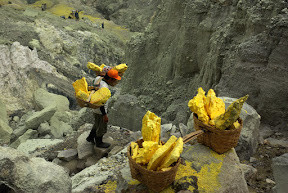
Being a sulfur miner at Kawah Ijen is not your normal 9 to 5 job. Just imagine what it would be like if you were one of the hardy 1300 souls who claim this rare profession. Your workday starts between 2 and 4 AM amongst the pre-dawn mist shrouding the volcano-studded Ijen Plateau in East Java. Your commute consists of a 3 kilometer hour-long uphill trek to the rim of the Ijen Volcano, ascending approximately 2000 feet in elevation. At the rim of the volcano, its top blown off and filled with a surreal turquoise-colored lake you look downward in the pre-dawn darkness and gaze at billowing sulfur gases. Welcome to your office.


You point your toes downward and begin the 30 minute, steep descent to the level of the lake and the origin on the pungent, thick sulfur smoke. Stumbling downward in the darkness you reach the sulfur mine, toxic gases vented through massive metal pipes. This view is familiar to you, but is foreign to nearly everyone else on this planet. Braving the billowing toxic gases, your eyes watering with a piece of rag tied around your mouth to prevent you from inhaling too much gas you approach the sulfur deposits. Working quickly and constantly watching the movement of the gas to avoid being enveloped in its acrid wrath you use a long metal bar to chip away chunks of solid sulfur. It glows a phosphorescent yellow in the morning light. You cough and wipe your eyes.


Having chipped away a number of large chunks of pure sulfur you transfer your load into two large hand woven baskets connected by a piece of two inch thick bamboo. You hoist the load onto one shoulder, its weight nearly crushes you, and you strain to begin the next stage of your workday. You typically carry 60-80 kilograms (132 to 176 pounds) per load, and because you are an Indonesian, this exceeds your body weight. Your legs nearly buckle as you make your way up the steep trail to the crater rim. With frequent rests you make it to the weigh station (about half-way down the mountain), where you load your 2 baskets (the pole in between) onto a scale. You are given a voucher for the load (through which you will receive your pay check), and proceed to deposit your load at a place of your choosing close to the bottom of the mountain. After a quick rest (it is now 2-3 hours into your workday) you head back uphill to gather your second load of the day.


This afternoon, Rachel and I relax at the Arabika coffee plantation, and reflect on the ease and simplicity of our lives. We are now in the Ijen Plateau, and we, too, woke before dawn and made our way to Kawah Ijen. Our hike to this beautiful volcano to witness its rugged beauty, lush forest, and unbelievable lake was a frolic when compared to the workday of miners who make their living hauling heavy loads and dodging sulfur gases. The landscape of Kawah Ijen is undeniably beautiful. Sulfur gases constantly drift across the lake’s turquoise water. Intricately fluted volcanic ridges reveal themselves through drifting clouds and sulfur fog. Stable substrates are cloaked in vegetation dominated by waist-high ferns dripping in morning dew. It is easy to fall in love with the beauty of this volcanic landscape. This beautiful scene serves as the backdrop to (at least in our minds) one of the world’s strangest professions.

An average miner will haul two loads totaling about 140 kilograms of sulfur to market in a single workday. Each miner receives 600 rupiah per kilogram of sulfur. This amounts to a grand total of about $9.20 per day. While this amount seems like a pittance, $9.20/day is actually not that bad in Indonesia, where a police officer receives about half this amount for a day’s work. And, quite counter intuitively, Ijen’s sulfur miners apparently suffer few health problems as a result of their occupation. With our own eyes we witnessed many men twice our age carrying loads we could not even lift up steep, unstable slopes. Maybe Ijen’s sulfur miners will lend us some perspective when, in the not too distant future, we curtail our wanderings and find ourselves back in the daily grind.